

- University
- Academic
- Schools/Vocational Schools
- Vocational School of Justice
- Vocational School
- Vocational School
- Department of Banking and Insurance (Turkish)
- Department of Computer Programming (Turkish)
- Department of Foreign Trade (Turkish)
- Department of Graphic Design (Turkish)
- Department of Interior Design (Turkish)
- Department of Construction Technology (Turkish)
- Department of Occupational Health and Safety (Turkish)
- Department of Media and Communication (Turkish)
- Department of Architectural Restoration (Turkish)
- Department of Radio and Tv Programming (Turkish)
- Department of Civil Aviation Cabin Services (Turkish)
- Department of Civil Aviation Transportation Management (Turkish)
- Department of Tourism and Hotel Management (Turkish)
- Department of Applied English Translation
- Vocational School Of Health Services
- Vocational School Of Health Services
- Department of Child Development (Turkish)
- Department of Physiotherapy (Turkish)
- Department of Paramedic (Turkish)
- Department of Opticianry (Turkish)
- Department of Medical Documentation and Secreteriat (Turkish)
- Department of Medical Imaging Techniques (Turkish)
- Department of Medical Laboratory Techniques (Turkish)
- Department of Elderly Care (Turkish)
- School of Applied Management Sciences
- School of Foreign Languages
- Faculties
- Faculty of Arts and Sciences
- Faculty of Fine Arts and Design
- Faculty of Law
- Faculty of Communication
- Faculty of Business
- Faculty of Engineering
- Faculty of Engineering
- Department of Computer Engineering
- Department of Biomedical Engineering
- Department of Electrical and Electronics Engineering
- Department of Industrial Engineering
- Department of Food Engineering
- Department of Genetics and Bioengineering
- Department of Aerospace Engineering
- Department of Civil Engineering
- Department of Mechanical Engineering
- Department of Mechatronics Engineering
- Department of Software Engineering
- Faculty of Health Sciences
- Medicine
- Graduate School
- Common Courses
- Schools/Vocational Schools
- Research
- Research Centers
- Library
- Smart Campus
- Technology Transfer Office
- İzmir Sciencepark
- Continuous Education Center (EKOSEM)
- Children's University
- Ethics Committee
- Teaching and Learning Center (EKOEĞİTİM)
- Psychology Application and Research Center
- Researcher Training Coordinatorship
- Research Collaborations And Innovation Coordinatorship
- Campus
- INTERNATIONAL
- Contact
- 25TH YEAR
FACULTY OF FINE ARTS AND DESIGN
Department of Textile and Fashion DesignFA 316 | Course Introduction and Application Information
| Course Name |
Natural Dye and Ecological Printing Techniques in Textiles
|
|
Code
|
Semester
|
Theory
(hour/week) |
Application/Lab
(hour/week) |
Local Credits
|
ECTS
|
|
FA 316
|
Fall/Spring
|
2
|
2
|
3
|
4
|
| Prerequisites |
None
|
|||||
| Course Language |
English
|
|||||
| Course Type |
Elective
|
|||||
| Course Level |
First Cycle
|
|||||
| Mode of Delivery | - | |||||
| Teaching Methods and Techniques of the Course | Group WorkApplication: Experiment / Laboratory / WorkshopLecture / Presentation | |||||
| National Occupation Classification | - | |||||
| Course Coordinator | ||||||
| Course Lecturer(s) | ||||||
| Assistant(s) | - | |||||
| Course Objectives | The aim of this course is to provide students with foundational knowledge and practical experience in natural dyeing and ecological printing techniques for textile design. Through hands-on activities, students explore the creative potential of these processes while gaining knowledge of sustainable materials, ethical production methods, and environmentally conscious design approaches. |
| Learning Outcomes |
The students who succeeded in this course;
|
| Course Description | This course covers fundamental natural dyeing and eco-printing techniques used in textile and fashion design. It introduces natural dye sources, materials, and production processes, combining theoretical knowledge with hands-on projects. |
| Related Sustainable Development Goals |
|
|
|
Core Courses | |
| Major Area Courses | ||
| Supportive Courses |
X
|
|
| Media and Management Skills Courses | ||
| Transferable Skill Courses |
WEEKLY SUBJECTS AND RELATED PREPARATION STUDIES
| Week | Subjects | Related Preparation |
| 1 | Introduction to the course, course program, and materials Campus walk to identify natural dye plants | |
| 2 | Technical visit to Arkas Sanat Bornova | |
| 3 | History of natural dyeing, knowledge of dyestuffs, types of mordants, and fabric mordanting applications | Recep Karadağ, Doğal Boyamacılık, Kültür ve Turizm Bakanlığı, İstanbul, 2007; Behan, Babs, Botanical Inks: Plant-to-Print Dyes, Techniques and Projects, Hardie Grant Publishing, Quadrille, pp.12–31. |
| 4 | Botanical printing techniques: Ecological printing | Behan, Babs, Botanical Inks: Plant-to-Print Dyes, Techniques and Projects, Hardie Grant Publishing, Quadrille, pp.107–109. |
| 5 | Field walk along the Balçova Therapy Forest route to identify and collect plant materials for eco-printing and natural dyeing - Botanical printing techniques: Hapazome | Behan, Babs, Botanical Inks: Plant-to-Print Dyes, Techniques and Projects, Hardie Grant Publishing, Quadrille, pp.107–109. |
| 6 | Fabrics and materials used in natural dyeing, dyestuff preparation, and dye extraction from plant sources - Natural dyeing applications using different plant materials | Behan, Babs, Botanical Inks: Plant-to-Print Dyes, Techniques and Projects, Hardie Grant Publishing, Quadrille, pp. 46–67. |
| 7 | Natural dyeing applications using different plant materials | Behan, Babs, Botanical Inks: Plant-to-Print Dyes, Techniques and Projects, Hardie Grant Publishing, Quadrille, pp. 46–67. |
| 8 | Midterm week | |
| 9 | Presentations | |
| 10 | Natural dyeing applications using different plant materials | Behan, Babs, Botanical Inks: Plant-to-Print Dyes, Techniques and Projects, Hardie Grant Publishing, Quadrille, pp. 46–67. |
| 11 | Biomaterial coloring applications | |
| 12 | Project: Product coloring using techniques such as natural dyeing, ecological printing, and hapazome; portfolio preparation | |
| 13 | Project: Product coloring using techniques such as natural dyeing, ecological printing, and hapazome; portfolio preparation | |
| 14 | Project: Product coloring using techniques such as natural dyeing, ecological printing, and hapazome; portfolio preparation | |
| 15 | Photo shoot | |
| 16 | Semester review |
| Course Notes/Textbooks | Flint, India, Eco Colour: Botanical Dyes for Beautiful Textiles, Interweave; Illustrated edition (September 14, 2010), ISBN: 978-1596683303 |
| Suggested Readings/Materials |
|
EVALUATION SYSTEM
| Semester Activities | Number | Weigthing |
| Participation | ||
| Laboratory / Application | ||
| Field Work |
1
|
15
|
| Quizzes / Studio Critiques | ||
| Portfolio |
1
|
35
|
| Homework / Assignments | ||
| Presentation / Jury |
1
|
20
|
| Project |
1
|
30
|
| Seminar / Workshop | ||
| Oral Exams | ||
| Midterm | ||
| Final Exam | ||
| Total |
| Weighting of Semester Activities on the Final Grade |
4
|
100
|
| Weighting of End-of-Semester Activities on the Final Grade | ||
| Total |
ECTS / WORKLOAD TABLE
| Semester Activities | Number | Duration (Hours) | Workload |
|---|---|---|---|
| Theoretical Course Hours (Including exam week: 16 x total hours) |
16
|
2
|
32
|
| Laboratory / Application Hours |
16
|
2
|
32
|
| Study Hours Out of Class |
14
|
1
|
14
|
| Field Work |
1
|
6
|
6
|
| Quizzes / Studio Critiques |
0
|
||
| Portfolio |
1
|
15
|
15
|
| Homework / Assignments |
0
|
||
| Presentation / Jury |
1
|
6
|
6
|
| Project |
1
|
15
|
15
|
| Seminar / Workshop |
0
|
||
| Oral Exam |
0
|
||
| Midterms |
0
|
||
| Final Exam |
0
|
||
| Total |
120
|
COURSE LEARNING OUTCOMES AND PROGRAM QUALIFICATIONS RELATIONSHIP
|
#
|
Program Competencies/Outcomes |
* Contribution Level
|
|||||
|
1
|
2
|
3
|
4
|
5
|
|||
| 1 |
To be able to develop and design a collection independently. |
-
|
-
|
-
|
-
|
-
|
|
| 2 |
To be able to do maintain a design research individually or as a team. |
X
|
-
|
-
|
-
|
-
|
|
| 3 |
To be able to develop entrepreneurship- and managerial skills for a future professional practice. |
-
|
-
|
-
|
-
|
-
|
|
| 4 |
To be able to understand, interpret and apply theoretical knowledge in fashion and textile design. |
-
|
X
|
-
|
-
|
-
|
|
| 5 |
To be able to analyze and integrate the particular local and regional needs and of their profession. |
-
|
-
|
-
|
-
|
-
|
|
| 6 |
To be able to obtain a multidisciplinary point of view, follow and analyze the new issues, changes and trends in contemporary design and art in such a way that they can be integrated into design practice. |
-
|
-
|
-
|
-
|
-
|
|
| 7 |
To be able to apply industrial requirements, knowledge of material & usage and know-how knowledge in the creation of high quality fashion products. |
X
|
-
|
-
|
-
|
-
|
|
| 8 |
To be able to use digital information and communication technologies at a level that is adequate to the discipline of fashion and textile design. |
X
|
-
|
-
|
-
|
-
|
|
| 9 |
To be able to develop an ongoing analytical and professional approach to academic and design research. |
-
|
-
|
-
|
-
|
-
|
|
| 10 |
To be able to recognize the need and importance of a personal lifelong learning attitude towards their chosen area of interest. |
-
|
-
|
-
|
-
|
-
|
|
| 11 |
To be able to collect data in the areas of fashion and textile design and communicate with colleagues in a foreign language ("European Language Portfolio Global Scale", Level B1). |
-
|
-
|
-
|
-
|
-
|
|
| 12 |
To be able to speak a second foreign at a medium level of fluency efficiently. |
-
|
-
|
-
|
-
|
-
|
|
| 13 |
To be able to relate the knowledge accumulated throughout the human history to their field of expertise. |
-
|
-
|
-
|
-
|
-
|
|
*1 Lowest, 2 Low, 3 Average, 4 High, 5 Highest













NEWSALL NEWS



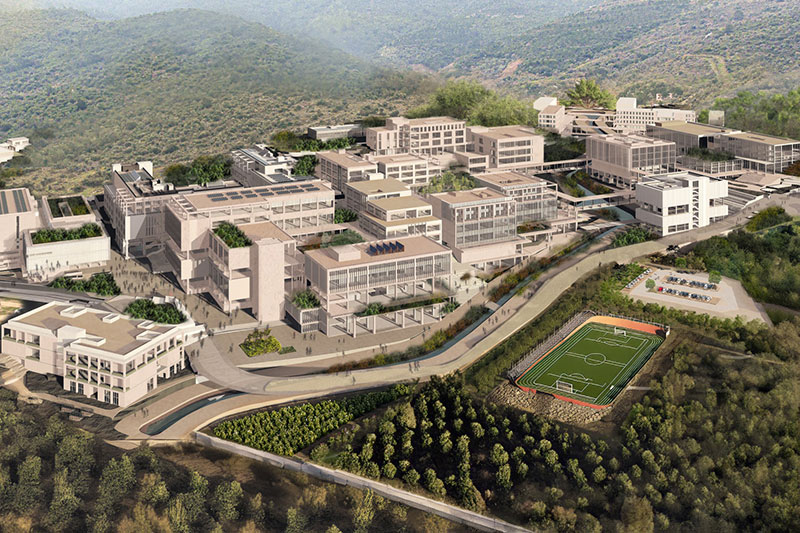
IZMIR UNIVERSITY OF ECONOMICS GÜZELBAHÇE CAMPUS
DetailsGLOBAL CAREER
As Izmir University of Economics transforms into a world-class university, it also raises successful young people with global competence.
More..CONTRIBUTION TO SCIENCE
Izmir University of Economics produces qualified knowledge and competent technologies.
More..VALUING PEOPLE
Izmir University of Economics sees producing social benefit as its reason for existence.
More..
You are one step ahead with your graduate education at Izmir University of Economics.